



True Armyworms in Treasure Valley Lawns
What homeowners should know about the current armyworm activity affecting Eagle, Star and other parts of the Treasure Valley.
Updated August 26, 2026 · Information based on the University of Idaho preliminary report
What we’re seeing
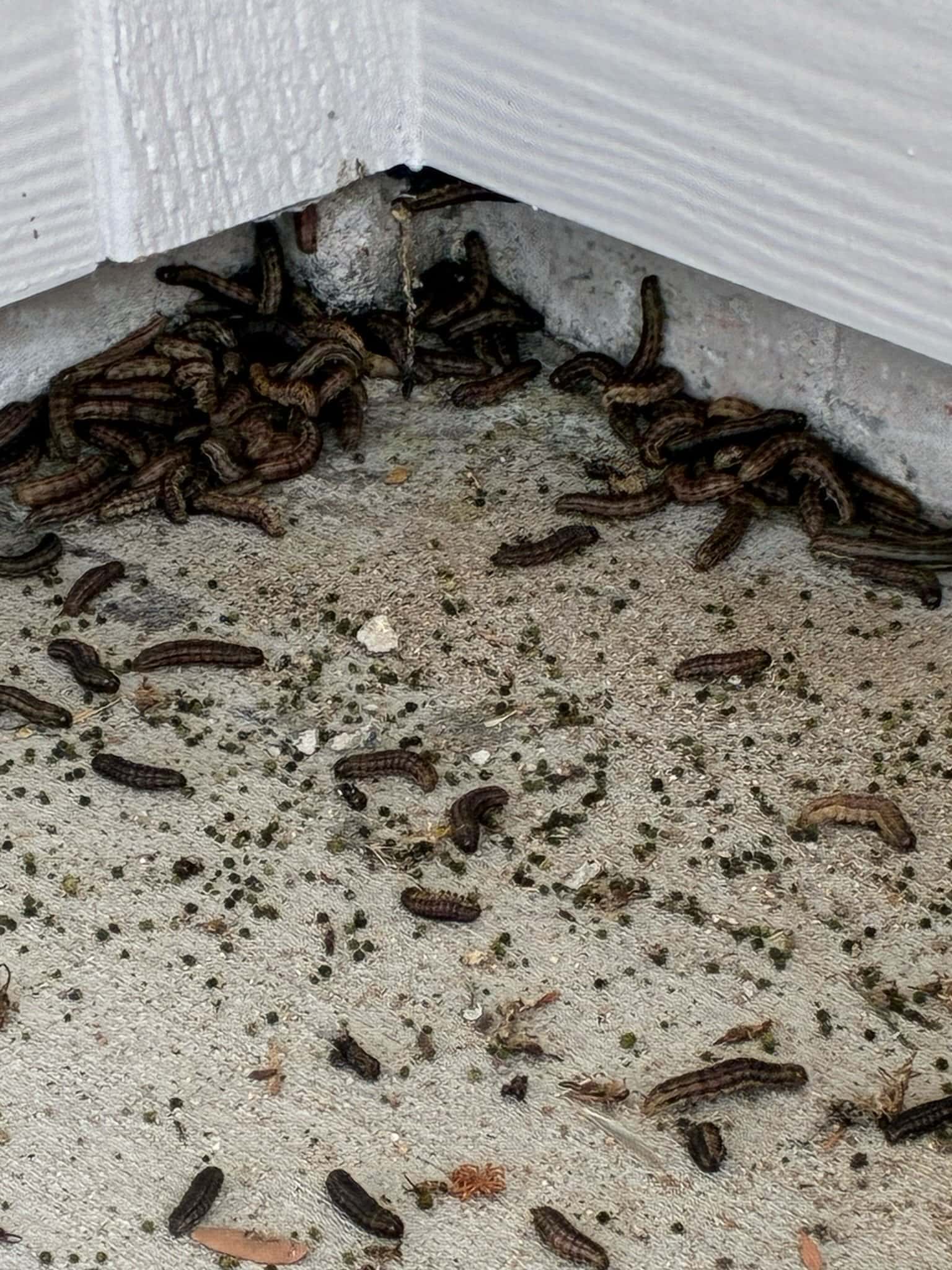
We are hearing reports of unusually high armyworm activity in the Eagle and Star area, as well as in other parts of the Treasure Valley. Caterpillars have been found in both newly installed sod and established lawns.
McKellip Sod Farm requested assistance from Dr. Armando Falcon-Brindis, Research Faculty and Extension Specialist of Entomology with the University of Idaho Parma Research and Extension Center, to investigate the issue.
After inspecting several properties around Star and Eagle, true armyworms were found in both existing turfgrass and newly installed sod. Our fields were also inspected, and no caterpillars or evidence of them were found on our farm.
Based on what we are seeing, this appears to be a regional pest issue rather than one isolated to newly installed sod.
What Is a True Armyworm?
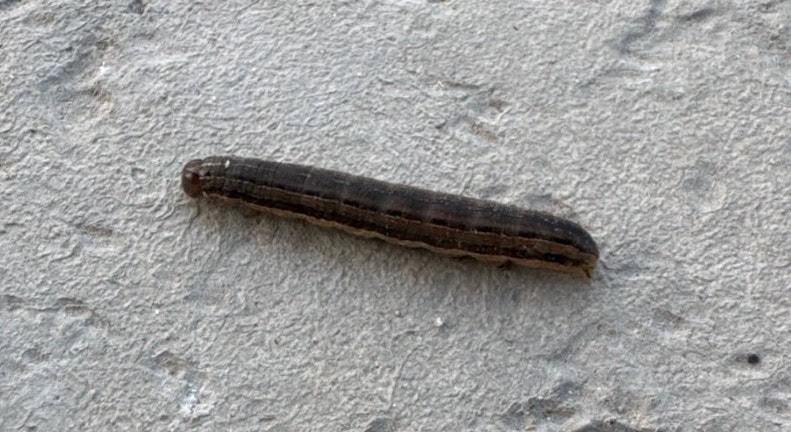
The pest identified in the University of Idaho investigation is the true armyworm (Mythimna unipuncta). It is also commonly called the common armyworm, white-speck moth or rice armyworm.
True armyworms are moths in the Noctuidae family. The damaging stage is the caterpillar, or larva. The larvae feed on grasses and other crops and can move in large groups, which is where the name armyworm comes from.
During the Treasure Valley investigation, armyworms were observed feeding on turfgrass containing mixtures of Kentucky bluegrass, ryegrass and tall fescue.
How to Identify a True Armyworm
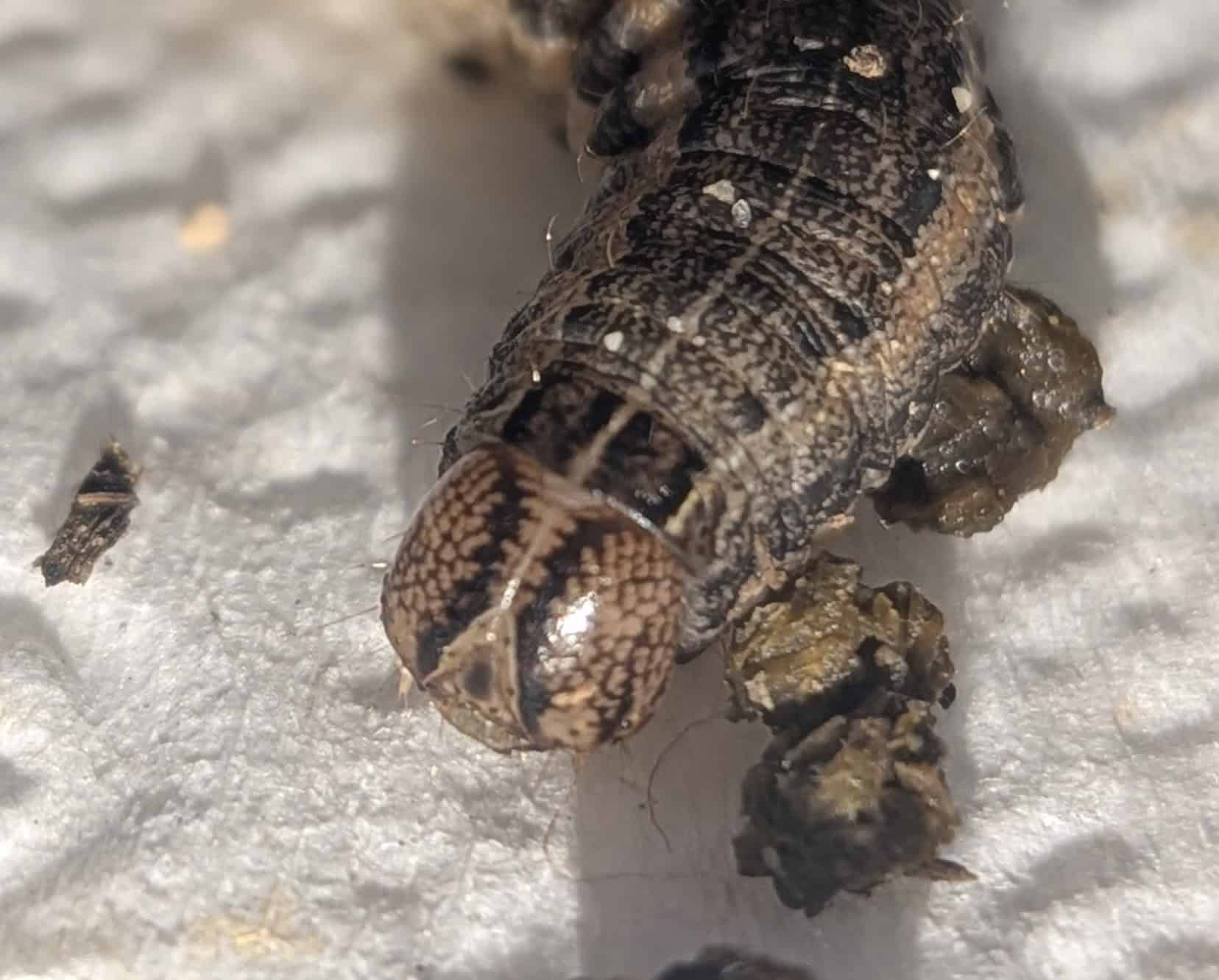
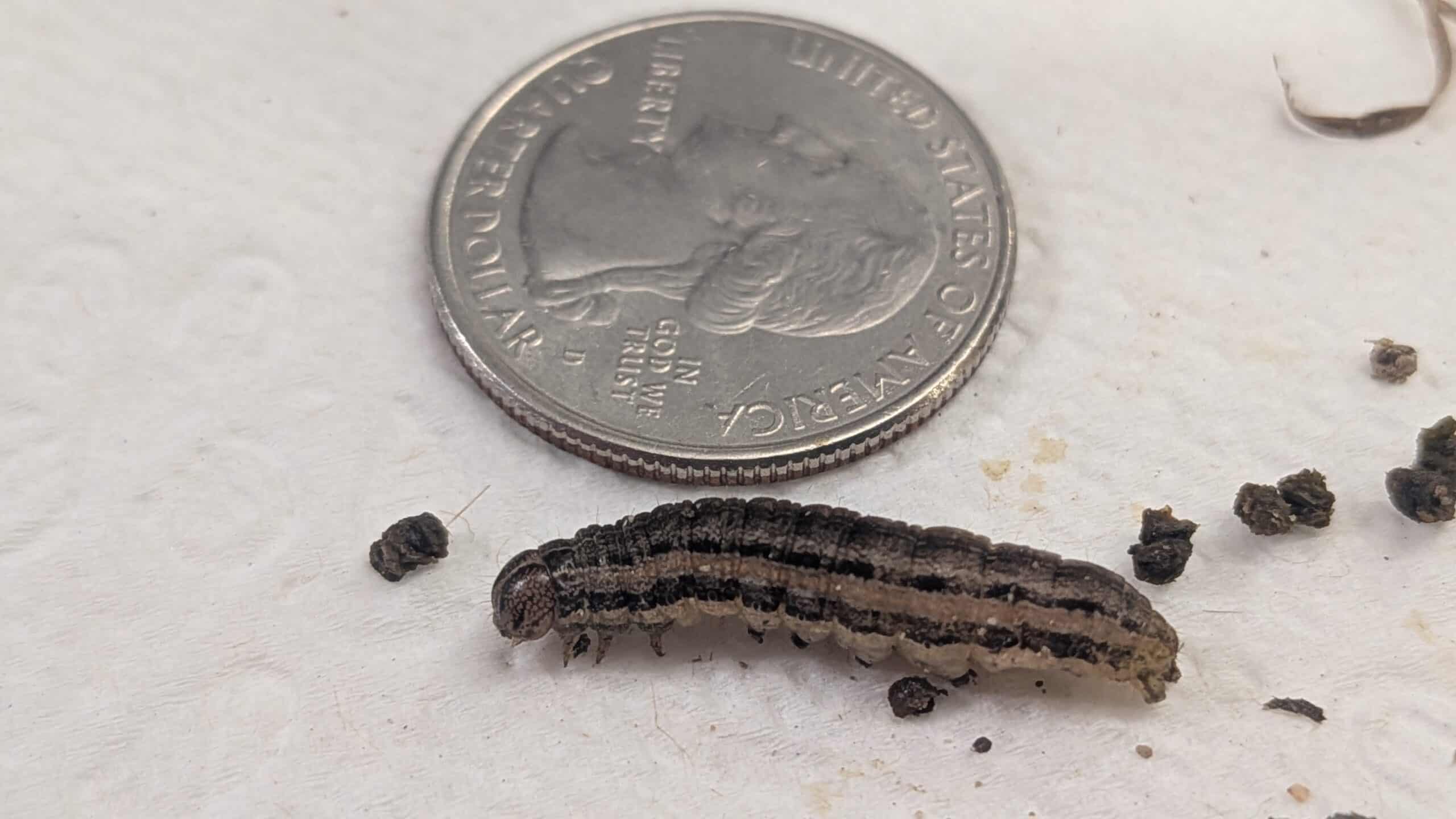
True armyworm caterpillars can be identified by several characteristics:
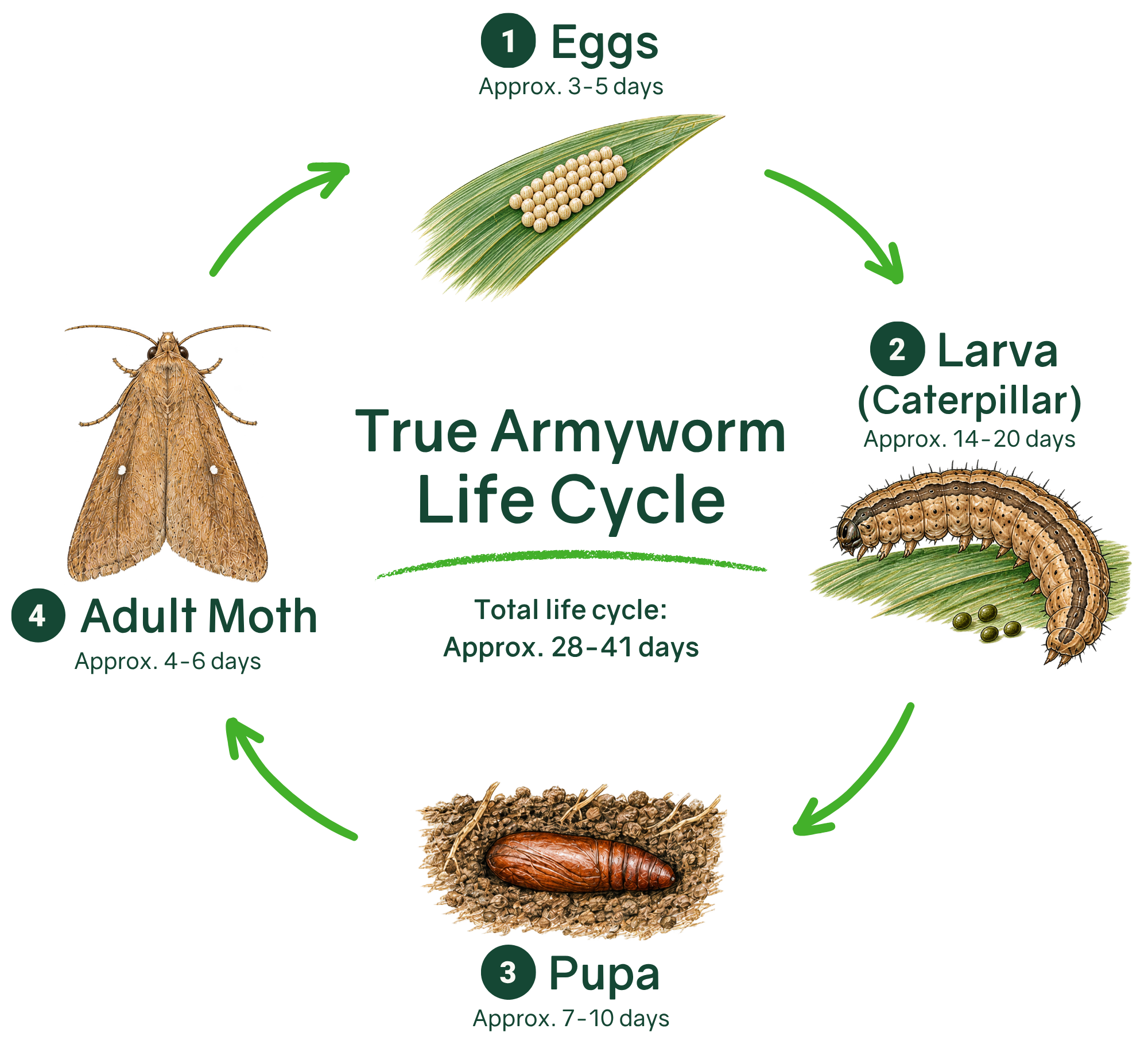
True Armyworm Life Cycle
True armyworms develop through four main stages. The larval stage is when turfgrass damage occurs.
1. Egg
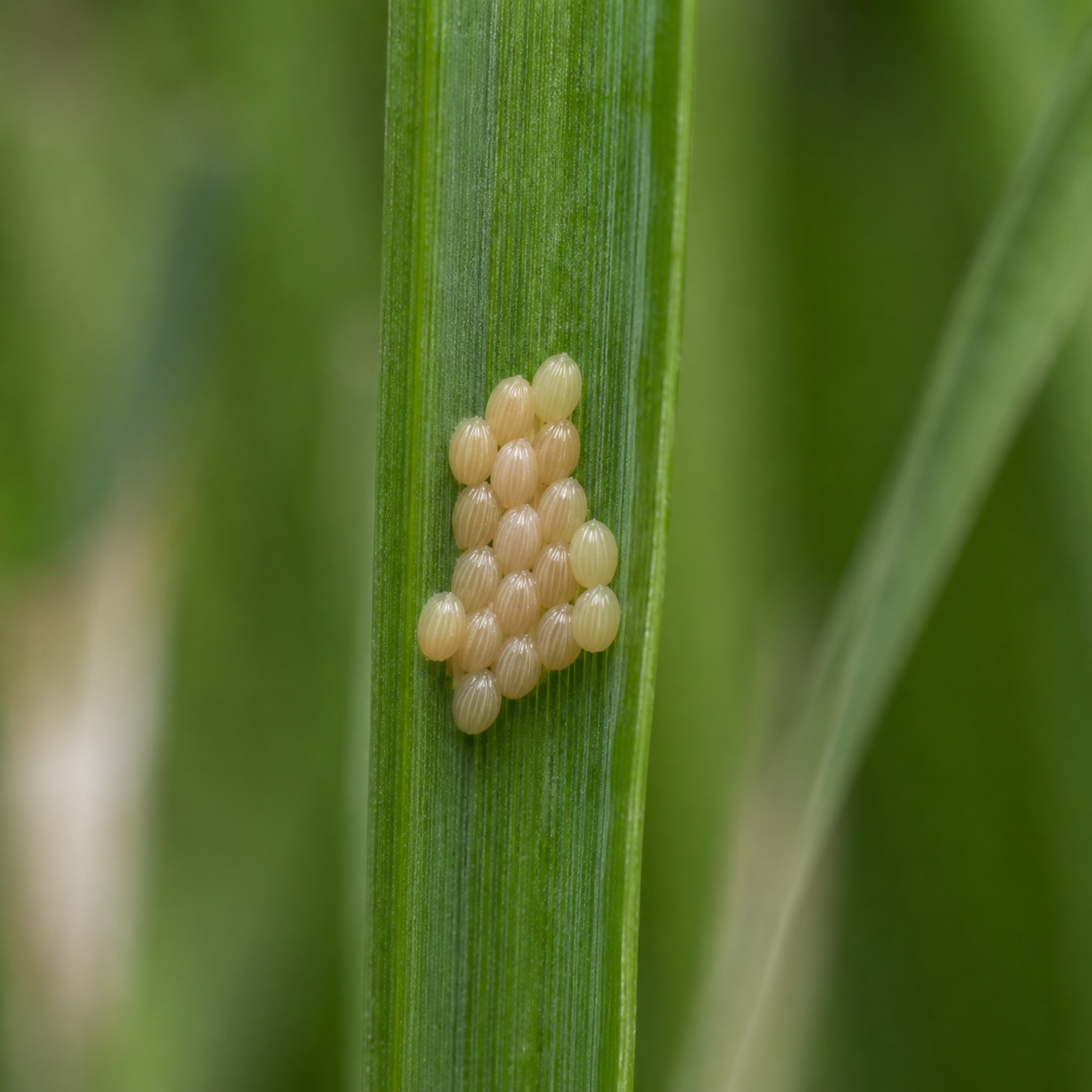
Adult moths lay eggs on grass blades that hatch into larva
2. Larva (Caterpillar)
Larva passes through six developmental stages, called instars, as they grow
3. Pupa
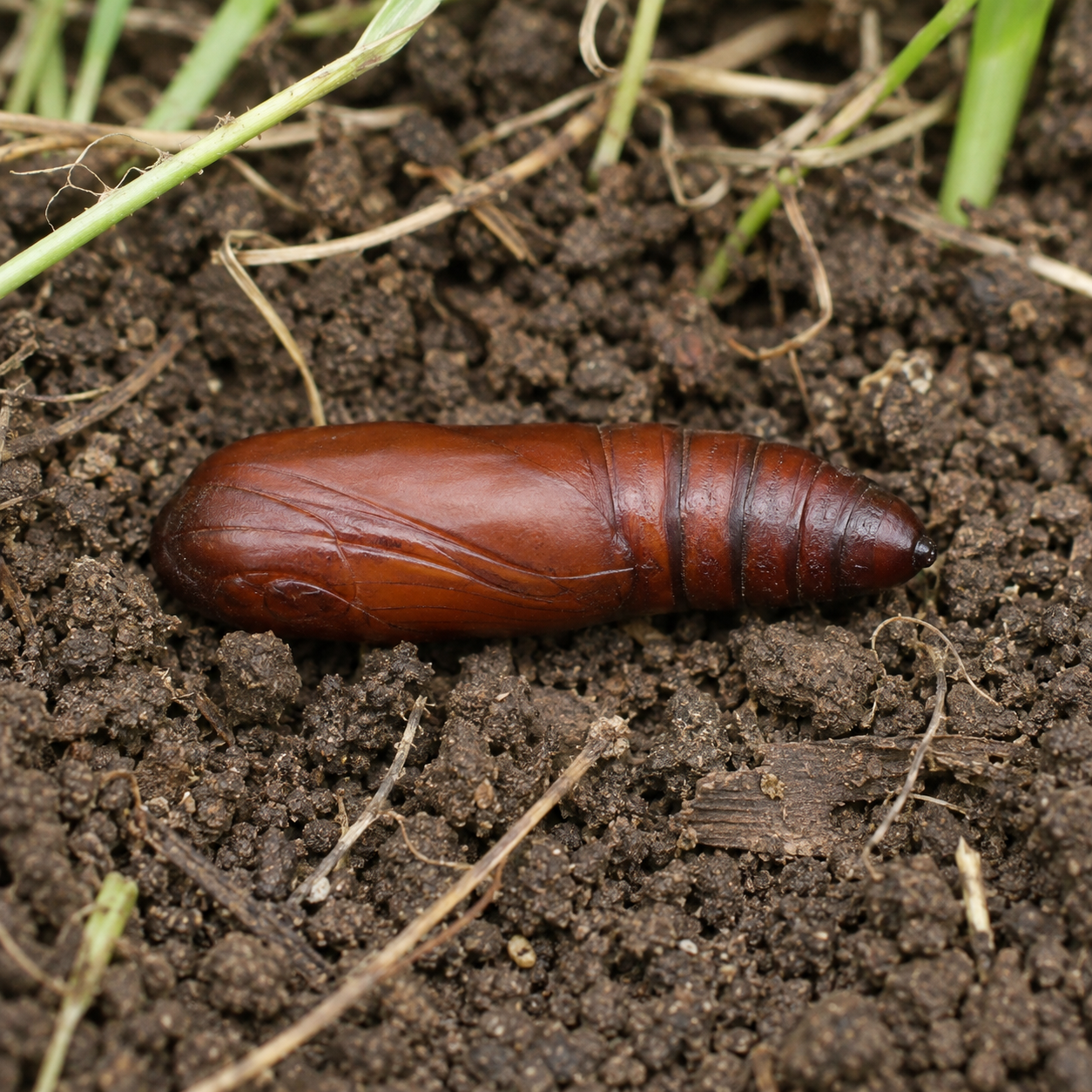
Mature larva leave feeding areas and typically pupate 2 to 4 inches into the soil
4. Adult Moth
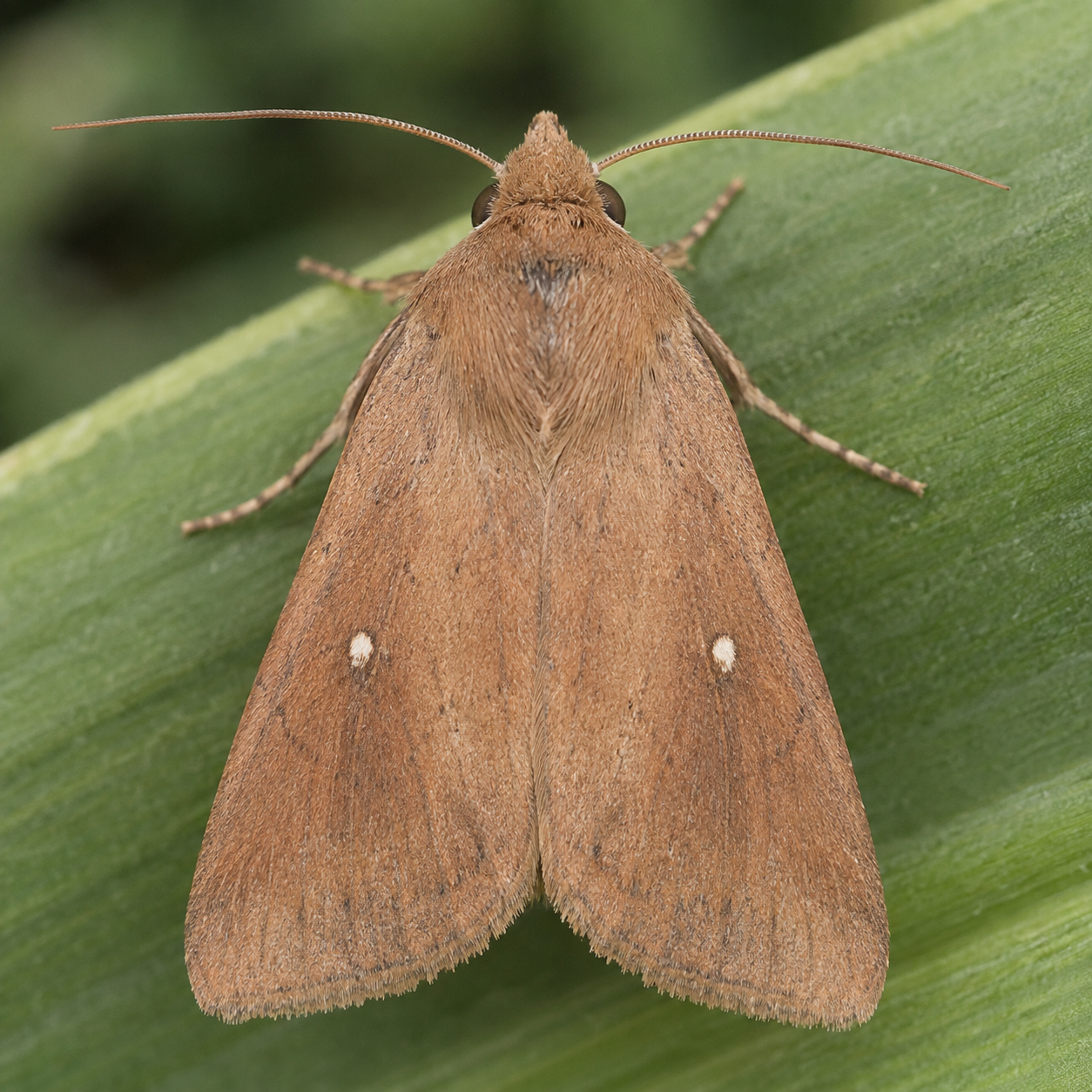
Adult moths emerge, mate and lay eggs. They have a distinct white dot on their forwings
How Can Populations Develop So Quickly?
Armyworm activity usually starts to slow down when temperatures start going below 55°F.
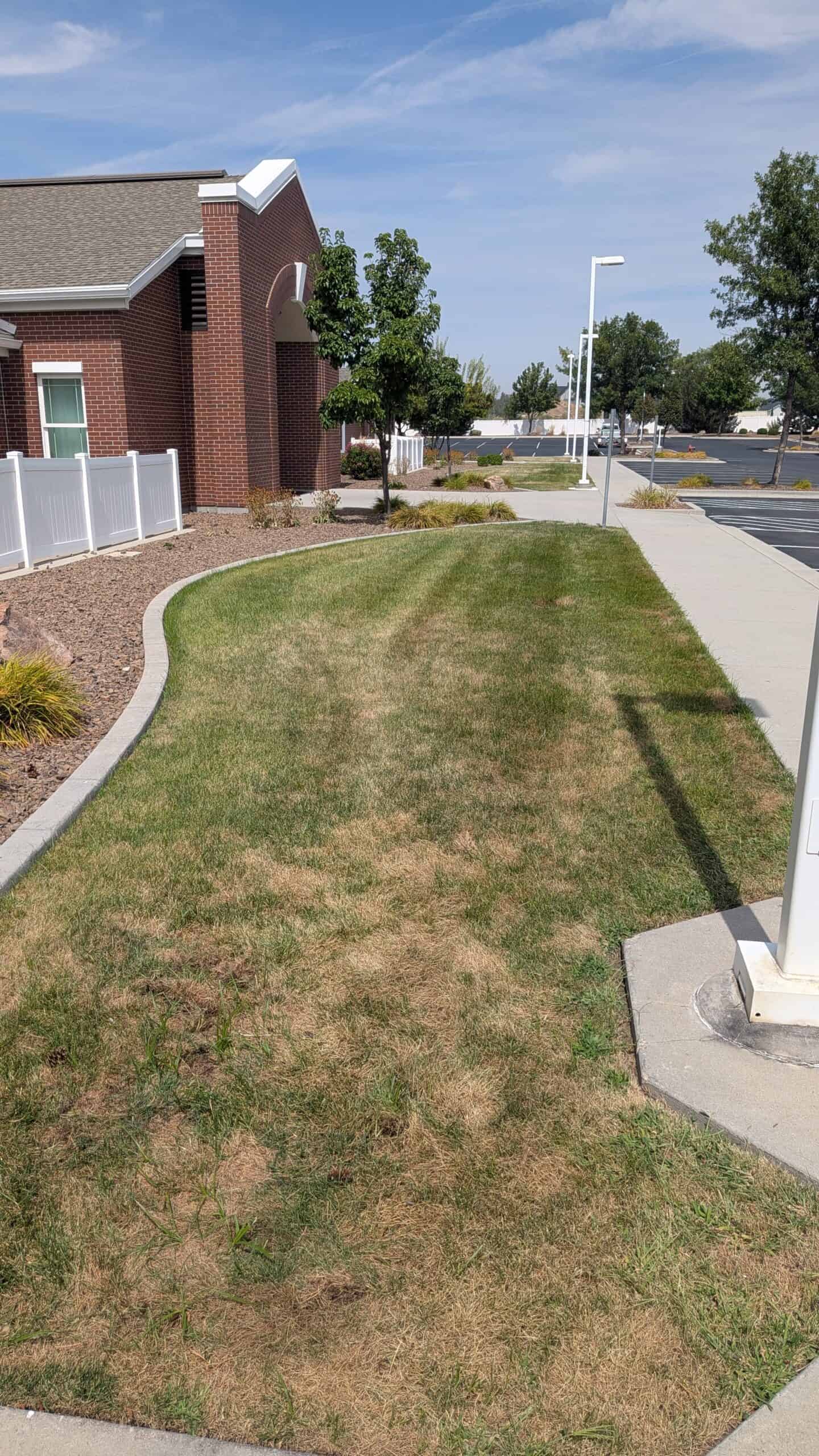
What Damage Do Armyworms Cause?
True armyworm larvae feed directly on grass foliage. During a heavy outbreak, feeding can become severe enough to rapidly thin or defoliate turf.
The University of Idaho report notes that larvae can feed on turfgrass to the point that the grass may not recover, particularly during severe infestations.
Signs to watch for
When Should You Be Concerned?
According to the University of Idaho preliminary report, populations greater than approximately 3 to 4 caterpillars per square foot warrant concern and may justify intervention.
Larval size is also important. Smaller caterpillars are generally easier to control, while larger late-stage larvae can consume grass much more rapidly. The report notes that caterpillars over approximately 0.75 inches long are in their final larval stage and are responsible for the majority of their lifetime foliage consumption.
Before treating your lawn
How to Check Your Lawn for Armyworms
Soap Flush Test
A simple soap flush can help determine whether armyworms are hiding in the turf during the day.
Mix 2 tablespoons of liquid dish soap with 1 gallon of water.
Pour the mixture over a 2-foot by 2-foot area along the edge of a damaged brown patch.
Armyworms hiding in the thatch may begin surfacing within about 60 seconds.
What Is McKellip Sod Farm Doing?
Based on the reports and inspections to date, this appears to be a regional pest issue. We will continue to:
Inspecting Our Fields
We will continue to inspect and monitor our fields every couple of days.
University Assistance
We requested assistance from Dr. Armando Falcon ([email protected]) with the University of Idaho Parma R&E Center to help identify the pest and investigate what is occurring in the Treasure Valley.
Tracking Reports
We are continuing to document reports from customers and other areas of the Treasure Valley to better understand where armyworm activity is occurring.
Sharing Updates
We will update this page as additional information becomes available.
Downloads & Resources
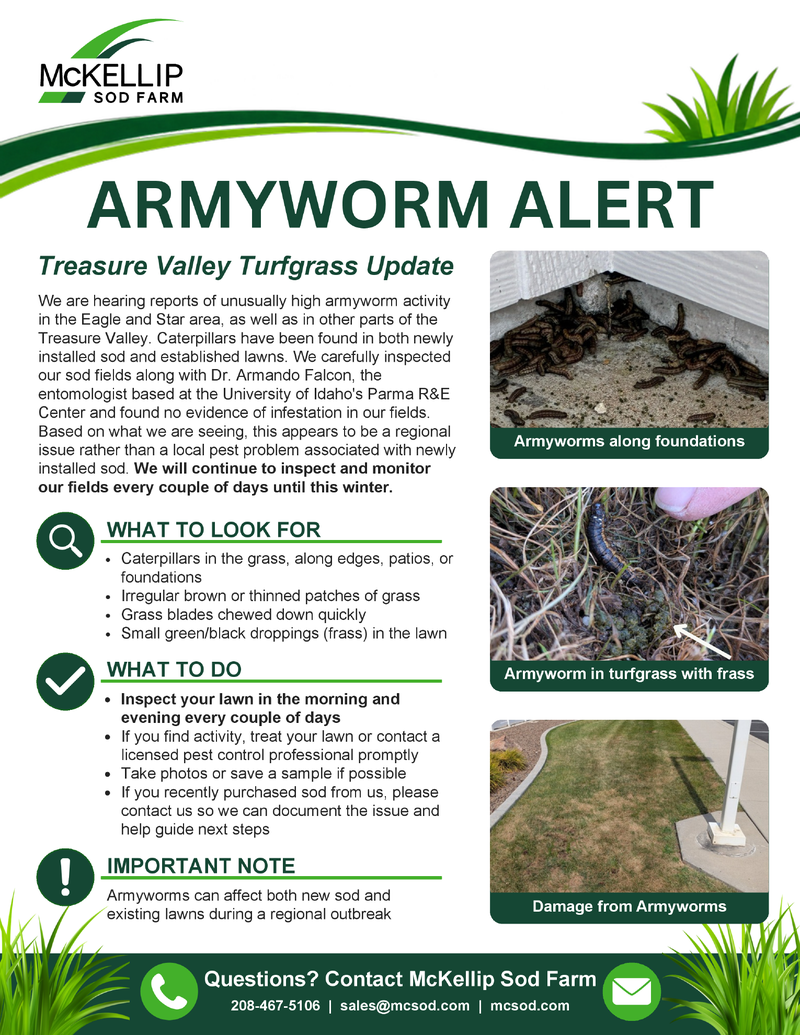
Armyworm Alert
An alert to notify customers what is happening and what they can do
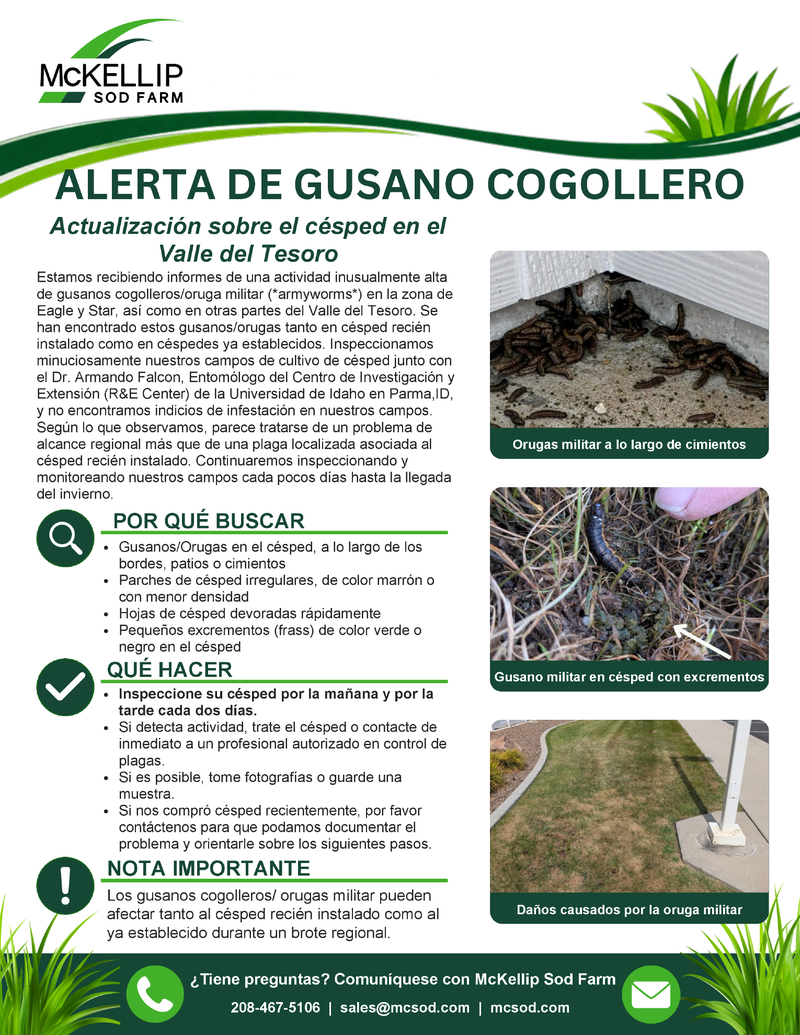
Alerta de Gusano Cogollero
Una alerta para informar a los clientes sobre lo que está sucediendo y qué pueden hacer
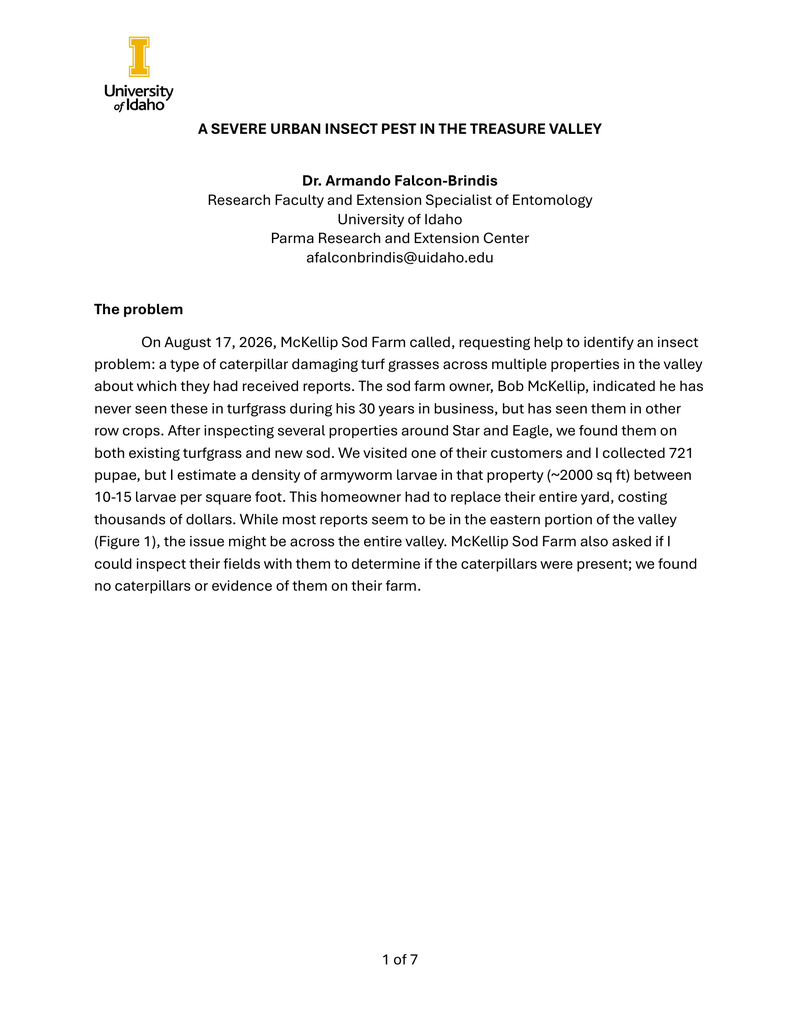
U of I Preliminary Report
Preliminary report put together by University of Idaho’s Parma R&E Center entomologist
Frequently Asked Questions
No. During the University of Idaho investigation, true armyworms were found in both established turfgrass and newly installed sod.
No evidence was found during the inspection documented by the University of Idaho entomologist. The report states that our fields were inspected and no caterpillars or evidence of them were found on our farm.
The pest identified in the University of Idaho investigation is the true armyworm, Mythimna unipuncta.
Under optimal summer temperatures, the entire life cycle can be completed in approximately 28 to 41 days.
When mature larvae are ready to pupate, they leave their feeding areas and search for suitable locations. During this outbreak, large numbers have been observed around patios, garages and houses.
Inspect the lawn carefully, perform a soap flush if needed, photograph the caterpillars and damage, and act promptly if populations are high. If you are unsure about identification or treatment, contact a qualified lawn-care or pest-control professional.